What Is Blockchain Technology? Explained in Simple Words
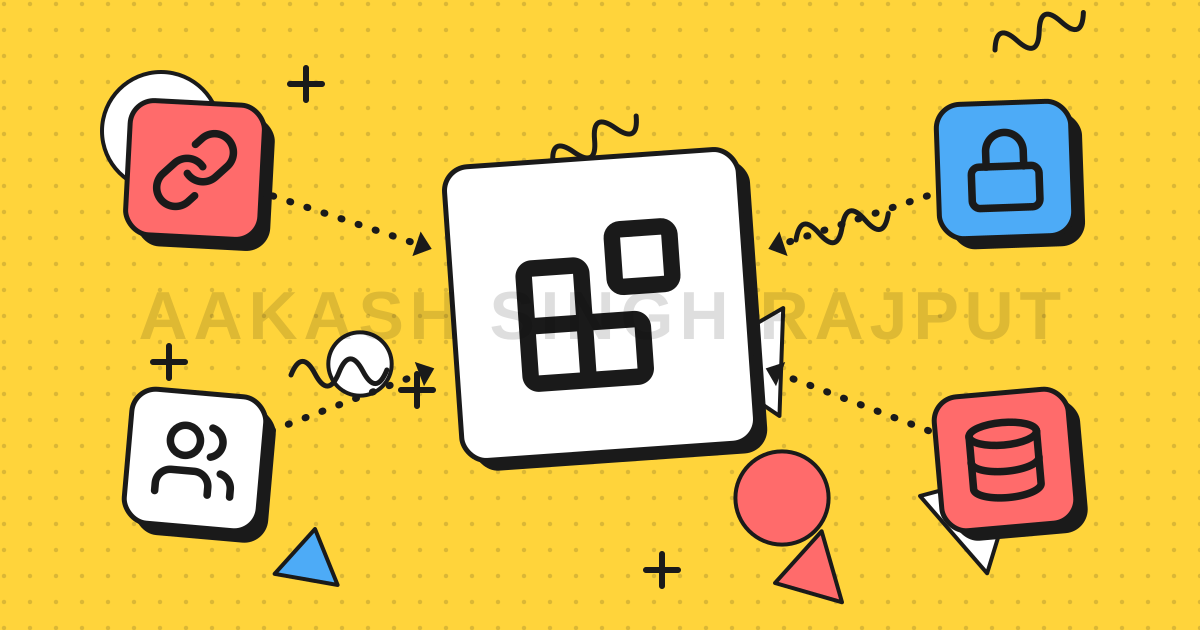
A blockchain is a shared digital record book that is stored on many computers at the same time. New records are added in groups called blocks, and each block is locked to the one before it with cryptography, forming a chain. Because thousands of computers hold the same copy and check every new entry, no single person or company controls it, and past records cannot be changed without everyone noticing.
A simple way to picture it
Think of a notebook that tracks who paid whom in a village.
- The usual way: one person, such as a banker, keeps the notebook. Everyone must trust that the banker is honest and careful.
- The blockchain way: every villager keeps an identical copy. When someone pays, the payment is announced to all. Everyone checks it and writes it on a new page. Each page includes a fingerprint of the page before it, so nobody can tear out or change an old page without breaking every page after it.
Nobody needs to trust one keeper. The group keeps the record honest.
The three ideas behind every blockchain
1. Blocks linked by hashes
A hash is a short digital fingerprint of some data. If the data changes by even one character, the fingerprint changes completely.
Each block contains:
- A list of transactions
- A timestamp
- The hash of the previous block
- Its own hash
Since each block stores the hash of the one before it, changing an old block changes its hash, which breaks the link to the next block, and the next, all the way to the end. Tampering is easy to detect.
2. Many copies (decentralization)
The record is stored on thousands of computers called nodes. There is no central server to hack or switch off. If some nodes go offline or lie, the others still hold the correct record.
3. Rules for agreement (consensus)
The nodes need a way to agree on which new block is valid. This set of rules is the consensus mechanism. The two best known are:
- Proof of work, used by Bitcoin. Computers compete to solve a hard puzzle.
- Proof of stake, used by Ethereum. Participants lock up coins as a deposit and lose them if they cheat.
They are compared in proof of work vs proof of stake.
For a step-by-step look at what happens to a transaction, read how blockchain works.
Blockchain vs a normal database
| Normal database | Blockchain | |
|---|---|---|
| Who controls it | One company | Many independent nodes |
| Changing old data | The owner can edit or delete | Practically not possible |
| Trust | You trust the owner | You trust the rules and the math |
| Speed | Very fast | Slower |
| Cost per record | Very low | Higher |
| Who can read | Whoever the owner allows | Anyone, on a public chain |
- Who controls it — Normal database: One company; Blockchain: Many independent nodes
- Changing old data — Normal database: The owner can edit or delete; Blockchain: Practically not possible
- Trust — Normal database: You trust the owner; Blockchain: You trust the rules and the math
- Speed — Normal database: Very fast; Blockchain: Slower
- Cost per record — Normal database: Very low; Blockchain: Higher
- Who can read — Normal database: Whoever the owner allows; Blockchain: Anyone, on a public chain
A blockchain is not a better database. It is a slower, more costly one with a special property: several parties who do not trust each other can share one record without a middleman.
What blockchain is used for
- Digital money. Bitcoin lets people send value across the world without a bank. See Bitcoin vs Ethereum.
- Smart contracts. Programs stored on a blockchain that run exactly as written. See what a smart contract is.
- Decentralized finance (DeFi). Lending, borrowing, and trading without banks or brokers. See what DeFi is.
- Stablecoins. Tokens that track the value of a currency such as the US dollar, used for payments and savings.
- NFTs. Proof of ownership for digital items. See what an NFT is.
- Supply chains. Tracking goods from factory to shop with a record all partners share.
- Tokenized assets. Shares, bonds, or property represented as tokens.
Public and private blockchains
- Public (permissionless). Anyone can read, send transactions, and run a node. Bitcoin and Ethereum are public.
- Private (permissioned). A company or group decides who can join. Used inside businesses. Faster, but you must trust the operators more.
- Consortium. Run by a group of organizations, such as several banks.
Blockchain, Bitcoin, and crypto are not the same
- Blockchain is the technology: the shared, linked record.
- Bitcoin is the first and largest application of it: a digital currency.
- Cryptocurrency is any digital money that runs on a blockchain.
Blockchain is to Bitcoin what the internet is to email. One is the base technology, the other is one thing built on it.
The benefits
- No single point of control or failure.
- Transparency. On a public chain, anyone can check every transaction.
- Records that cannot be quietly changed.
- Fewer middlemen, which can lower fees and delays.
- Open access. Anyone with an internet connection can use it.
The limits
- Speed and cost. Every node processes every transaction, so base chains handle far fewer transactions per second than card networks. Layer 2 networks are the main answer.
- Mistakes are final. Send funds to the wrong address or lose your keys, and nobody can undo it. See how crypto wallets work.
- Public by default. Every transaction is visible. Privacy needs extra technology.
- Bugs in smart contracts have caused very large losses.
- Not needed for most problems. If one trusted party can run the system, a normal database is faster and cheaper.
- Changing rules. Laws on crypto differ by country and continue to change.
Do you need a blockchain? A quick test
Ask these questions:
- Do several parties need to write to the same record?
- Do they not fully trust each other?
- Is there no middleman everyone accepts?
- Does it matter that old records can never be changed?
If the answer to any of them is "no", a normal database is probably the better choice.
FAQ
What is blockchain in one sentence?
It is a shared record stored on many computers, where new entries are checked by the network and old entries cannot be changed.
Who invented blockchain?
The first working blockchain was described in 2008 in the Bitcoin paper by an unknown person or group using the name Satoshi Nakamoto. It went live in January 2009.
Can a blockchain be hacked?
Changing the history of a large public chain such as Bitcoin or Ethereum would need control of most of the network, which is extremely costly. Most thefts happen through weak points around the chain: stolen keys, faulty smart contracts, and hacked exchanges.
Is blockchain only used for cryptocurrency?
No. Cryptocurrency is the largest use, but blockchains also run smart contracts, stablecoins, digital ownership records, and shared business records.